To reinforce the formula for the volume of a cone, I have my students create a cone and cylinder with the same radius and height, I pop a huge bag of popcorn, then we see if 3 cones full of popcorn will fill their cylinder. I could have my students google the process of making a cone with a specific height but it takes awhile so I give them the process. If you have a few days to spend on it, having them come up with the process would be a great way to add rigor to the project. I’ve added my note sheet at the bottom that includes the process and reflection.
How do we get students to think, to focus on learning, to seek out learning, to want to learn? This is a conversation that my husband, a secondary principal, and I had on our 4-hour car ride this weekend. We are both learners. We love to learn new information and seek out people to learn from. I don’t see this in most of my students.
In the scavenger hunt activity that I posted, students needed to look at images and decide which one would answer the question.
student: Mrs. Tolen, how do I know what it’s asking?
Me: What are you clues?
Student: Can’t you just tell me?
Me: Yes, but I’m not going to.
Student: But that’s you job.
Me: No, my job is to teach you to learn. Tell me one thing that might give you an idea about what this is asking.
Student: UGH!
It’s exhausting to do this day after day. I had hoped by 3rd quarter that students would start taking an initiative. Standards based grading has helped them identify what they need help with and they’ll tell me what they need help with but they still just want me to tell them how to do it. I’ve talked to them about brain based research, about how THEY need to process the information to learn it. They want the path of least resistance.
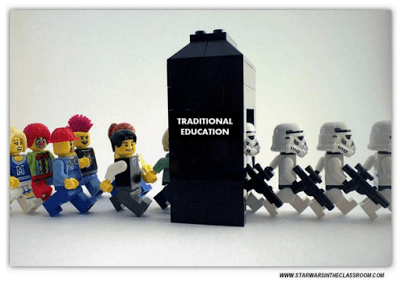
via starwarsintheclassroom.com
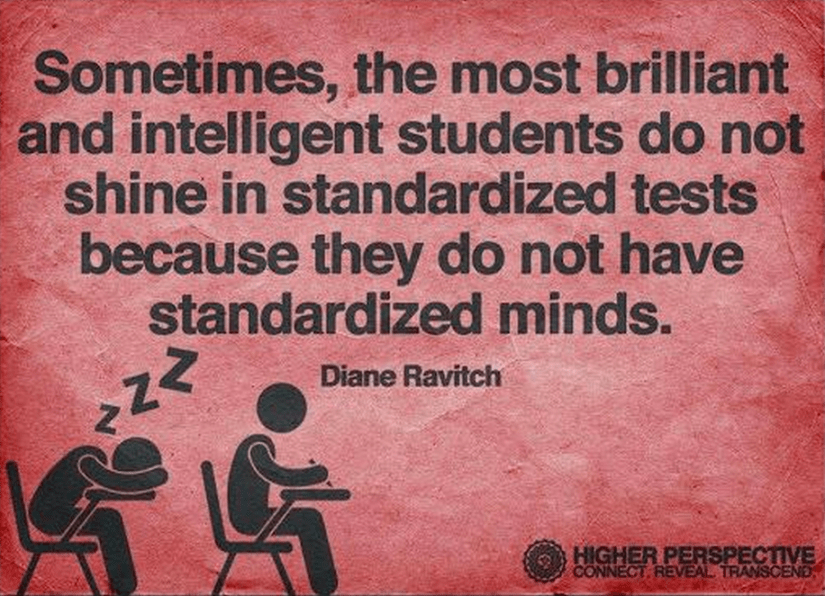
We’ve created this issue. Start here stop there, do this then that, create this and here’s my example to copy… Students who are most successful (based solely on grades) are the ones who can regurgitate information quickly, copy a project precisely, and complete assignments the first time even if they didn’t completely understand. When you ask these students to use this information in a new situation, create something unique, or to explore something they may never have seen before, this is when true intelligence rises to the top.
This is what employers want. They want thinkers, not drones, they want new ideas and innovation. I don’t know the easy button answer to my first question:How do we get students to think, to focus on learning, to seek out learning, to want to learn? I know we need to change what we are doing with students. We need to get rid of standardized testing, GPA, class rank and anything else that focuses on a grade and not on learning. We need to create a culture where students want to learn, where their first response is to think about a solution, and simply copying what someone else has done is just not good enough. We need to keep asking questions and stop always giving answers.
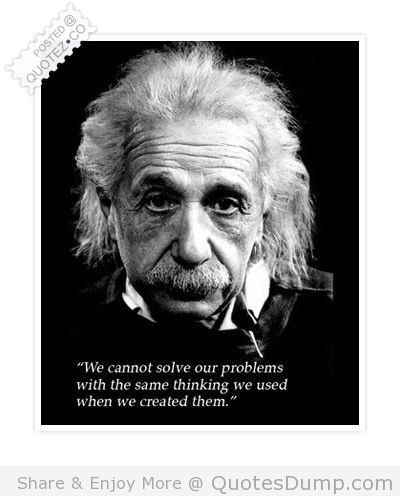
I’m going to end with Einstein – a great thinker who impacted our world. He didn’t consider himself intelligent but he did consider himself a learner.
Through #MTBoS I found a video from (insert name here when I find it again) talking about using Google in the classroom. I’m always looking for ideas I haven’t thought of before. Most of the video was reinforcement for what I already do but he did have a foldable (please comment if this is yours so I can credit you) created in Google Slides. I loved it.
I combined this foldable with a QR scavenger hunt to reinforce question prompts in quadratic word problems. This was a thinking activity for the students. They don’t usually like thinking activities. They did enjoy the QR part and I could tell by the discussions at the tables that thinking was happening. In the end, they had a resource to use while working their practice problems.
This slideshow requires JavaScript.
Below are the links to my files. They are set to read only so you’ll have to make a copy to use them. You will also want to make your own QR codes so students are pulling these images from your Drive. I used the goo.gl extension in my Chrome browser.
Our focus in education for quite awhile now has been on literacy in reading. It was a need, a need that we have and continue to address. So before I begin this monologue, please hear me say we need to support reading. It’s important.
So is math! A student also needs to be literate and fluent with math. Yet we don’t support math like we do reading. We don’t provide interventions for math like we do reading. We pass students to the next grade even though they are not proficient in the skills and competencies for the grade they are leaving. They can read so they pass.
We are harming students. It’s negligence on our part as educators. What happens to a student who doesn’t master their multiplication tables in the 3rd grade? They struggle with long division in 4th, but they pass. That lack of success (because we don’t want to say failure) compounds year after year, making a student believe they are stupid, that math is hard, that they can’t learn math. But at that point in their education it’s ok if they can’t learn math, they haven’t had to so far. They can pass to the next grade and the next and be grossly deficient in math skills. Then they arrive at high school, where grades matter and courses must be passed to graduate. This is how they come to me.
The expectation when they arrive in my classroom is for them to learn Algebra 1. Seems simple enough. Our curriculum is good, it’s aligned to our state standards, it’s vertically aligned with other grade levels. Oh, but students haven’t had to learn this wonderfully aligned curriculum. They passed from grade to grade because they could read. Here is the task we’ve actually been given.
We are supposed to bring students out of a learning hole that is 3 or 4 years deep and help them climb the tree to learn Algebra IN ONE YEAR. They haven’t had to learn math for a long time and now they have to learn multiple years of math to be successful. I use data and standards based learning. I can show that my students are making progress. Sometimes I only take them to the top hole and we sit in the grass. Yes, that means they don’t pass Algebra 1 the first time, but they learned.
So the argument I’m getting is, if they’ve learned why don’t they pass? My answer: because they didn’t learn Algebra 1. We never made it to the tree, we only sat in the grass and we celebrated that success. If we pass these students, we are as negligent as those before use. We are perpetuating the problem. If they pass to Geometry and Algebra II, they will be right back down in the hole we were trying to pull them out of.
People keep asking me what the solution is and I keep giving it. WE NEED MATH RTI IN ELEMENTARY AND MIDDLE SCHOOL. We need to make sure these students get the support they need to be successful EVERY YEAR, not wait until Algebra I and hope I arrange a miracle that drags them from the bottom of the pit to the top of the tree with the snap of my fingers.
Help our students, support our students, show them they CAN learn math from the beginning. I want them to be successful too but you are sending me an impossible task and setting our students up for FAILURE, and not the kind you can learn from.
I’m climbing off my soap box for now, but even from the ground I will continue to advocate for RTI in math. It’s time our focus is on literacy in more than just reading.
Wow, my brain is on overload after the METC conference in St. Charles, MO. I’ve been inspired by George Couros @gcouros & Rafranz Davis @rafranzdavis to share my voice not just my creations.
I set up this blog a few years ago to share content and tech ideas from my classroom (and I fail at keeping up with that sometimes). I was encourage by Sean Nash @nashworld, our technology coordinator at the time, to share what I was doing in my classroom. I will always be grateful to Sean for that push. I love helping other utilize tech to enhance the learning of students.
What I have been neglecting is my voice that focuses on learning. I share this voice on Twitter through edchats like #DitchBook with @jmattmiller, #SBLchat and #MOedchat. I share my voice in person with anyone who doesn’t run from me (and sometimes my “passion” is a little too strong and they do run). I don’t share this voice about my passion for learning here. I plan to change that! Everything I do is to help students LEARN. I use technology to engage students, meet them where they’re at, and to enhance (change, reinvent…) content learning. I use standards based grading to empower students to take learning into their own hands and to show them that learning is ongoing and happens at different times for different people. I am passionate about grades reflecting learning and not compliance or busy tasks.
I still plan to share technology ideas – please use them – it’s our duty as teachers to share our ideas so others can benefit. But, I also plan to share my thoughts and ideas about teaching and learning. At least on the blog I won’t know if you’re running away 🙂
Thanks George and Rafranz for challenging me! #geekyfangirlmoment
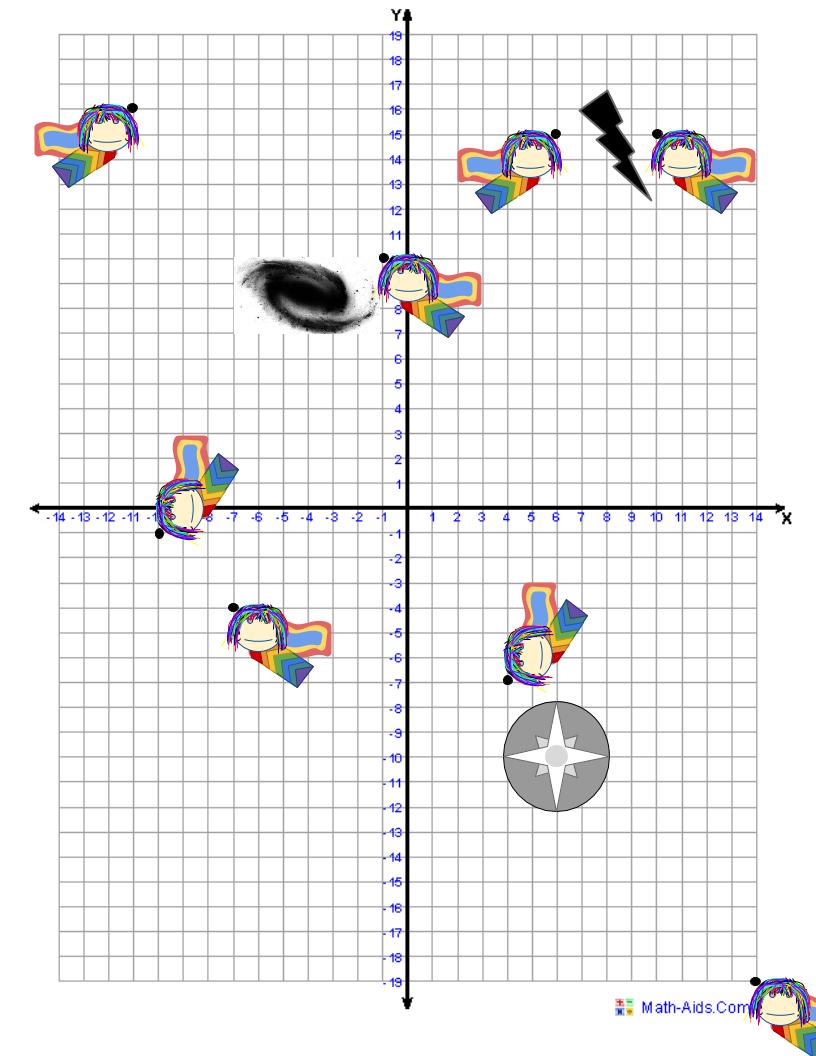
I found this project a few years ago and I’ve had the students create them on paper. The products are always very impressive and students love the project. The original link can be found here. This year I wanted the students to create online using Google Docs and Draw. It was a little bit of a learning curve, but I like that the student used the transformation tools built into Google Docs. I’ve posted a few examples below and also my updated version of the original project I linked to above. It really helps the students visualize transformations and helps them use this vocabulary in context of their situation.
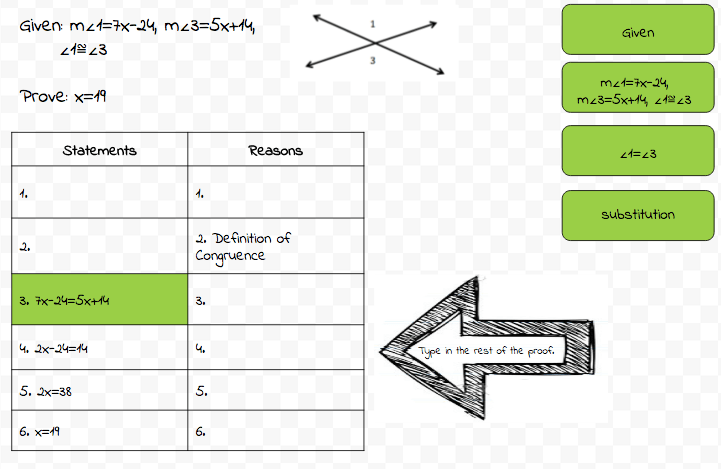
When we got our iPads, I wanted some interactive activities for my students. Using Pages, I created my first drag & drop activity. When we transitioned to Chrome, I also transitioned my platform. I started using Google Draw. I created one page proofs for students to practice with, taken from a paper activity I used year after year.
Once I figured out how to force a copy for slides (now Classroom does it for me!) I started making multiple practice pages with slides. Now I have a huge selection of activities that I use with all of my classes. I’ve shared some below.
Students love using these activities, especially the Solving Equations & Writing Equations when they can work at their own pace. I used both of these as remediation for standards students were stuck on. It was a success! I hope you find some inspiration with these and begin making some of your own. Please share if you do!
Our Unit 2 linear equations project was the famous Barbie Bungee from Illuminations. We added a creation component, a poster created as a full color magazine advertisement, to the project so the students would have an end product. Students love to make Barbie bungee, a lot of them also loved creating the poster. There was some disconnect between the two and some of their products had to be corrected to reflect their learning. Overall, we had some great practice creating linear regression equations & interpreting slope and intercepts.
You know when you find a project and you think, “This could be a fun project that my students could benefit from”, and then you get the results from your students and it was a flop? Well this isn’t that type of project. I was blown away by some of the stories my students created. I don’t have all of them listed below because they have to correct their mistakes before I will publish them, but they can keep correcting until it’s ready for the public eye. Check back, I’ll add more as they become available.
I can’t take all the credit for this project. The original idea came from @jmattmiller in his book Ditch That Textbook. I did make the scoring guide and the planning sheet to help students create this. Matt also has a video on his site that would be a good resource also.
Now Matt teaches Spanish and I teach Math, but the basic idea of Choose Your Own Adventure is present and could be adapted for any content area. My students had to have 5 equations, a good story line, images, & explanations of misconceptions if a player choose the wrong answer. We started by writing the story on the planning pages. It’s a lot easer to type this into Google Forms if you already have your story and equations in place on the planning page. I also included instructions about how to enter the information into forms on the back of the planning pages.
My scoring guide is based on our SBL. Our non-math standards include Quality of Work, Completeness of Work and Timeliness, basic skills an employer would want. We also assess based on our Math standards from our curriculum. You may take my scoring guide and adjust it to fit your curriculum.
I have the Docs set up to make a copy when you click on them.
Now for some awesomeness. (Disclaimer – some didn’t follow copyright and snagged images from Google. We did talk about this but some chose the easier path)
After much preparation, we began the year with SBL. I created a detailed newsletter using Piktochart, then recorded a video as I discussed how SBL will work in my classroom so parents could hear instead of just read it. We set up our gradebook with standards, flipped our classroom, designed projects to assist learning, gave choices in the learning process & created awesome data tracking (Alice Keeler to the rescue) for ourselves and for the students. Then we gave our first assessment. OUCH! Students freaked out, parents freaked out, teachers stressed out… “How can I raise my grade?” “What can I do to get an A?”
We are trying to make parents and students understand that the scores aren’t permanent. We are teaching on mastery ALL SEMESTER LONG. They will have many opportunities to work on skills they are struggling with. We have time to work 1:1 with students within the class day. We are trying to convince them this is a good thing. Our next assessment is this week. I hope students and parents will see the scores replaced with higher marks as their students begin to master the content.
It’s been a rocky start, but I’m still very excited SBL. I think the student and parent focus will change to learning and not just “doing” as they begin to see the value of this process. Until then, I have more emails to return…






 Infinitely Teaching